Making a windsurf board foil-ready (JP Magic Ride 116)

Converting a freeride board, in this case a JP Magic Ride 118 into a foil-ready version can be done by anyone with a little bit of patience. Freestyle windsurf boards are even a bit easier to convert since they don't have a fin-box that is laminated both the lower and upper deck which makes the removal a bit easier. The original screw hole for fin mounting was reused as the aft mounting hole for the foil, effectively moving the fin/foil mounting position a few centimeters forward which is desired as it reduces the distance between the mast foot and the foil. Looking back at this I should have shifted it much more forward.
This post is rater a compilation of pictures than a full description - for details refer to my other post here: https://builders-blog.com/s4gp77v/fanatic-skate-101-foil-edition
Cutout for the deep tuttle box:
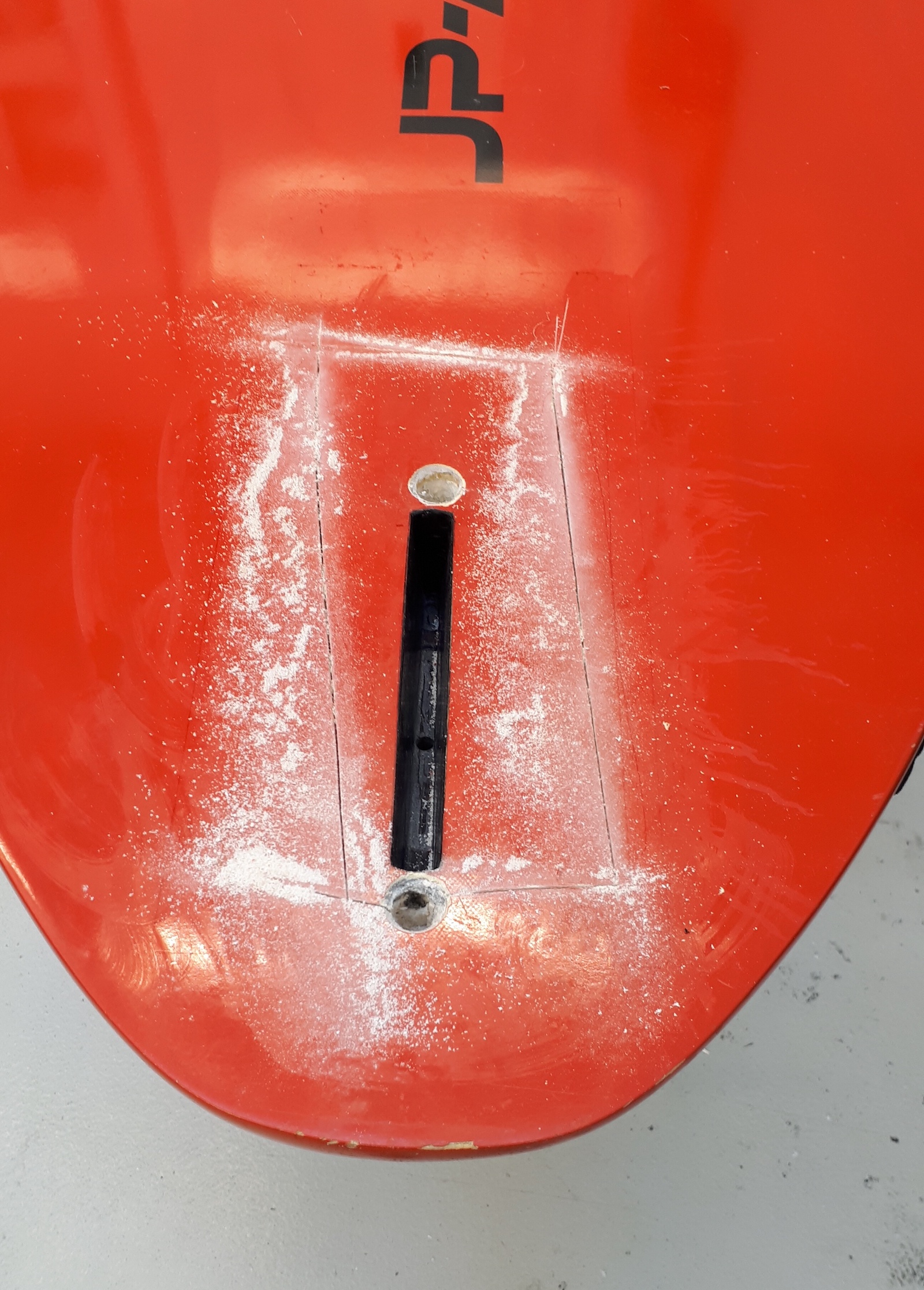
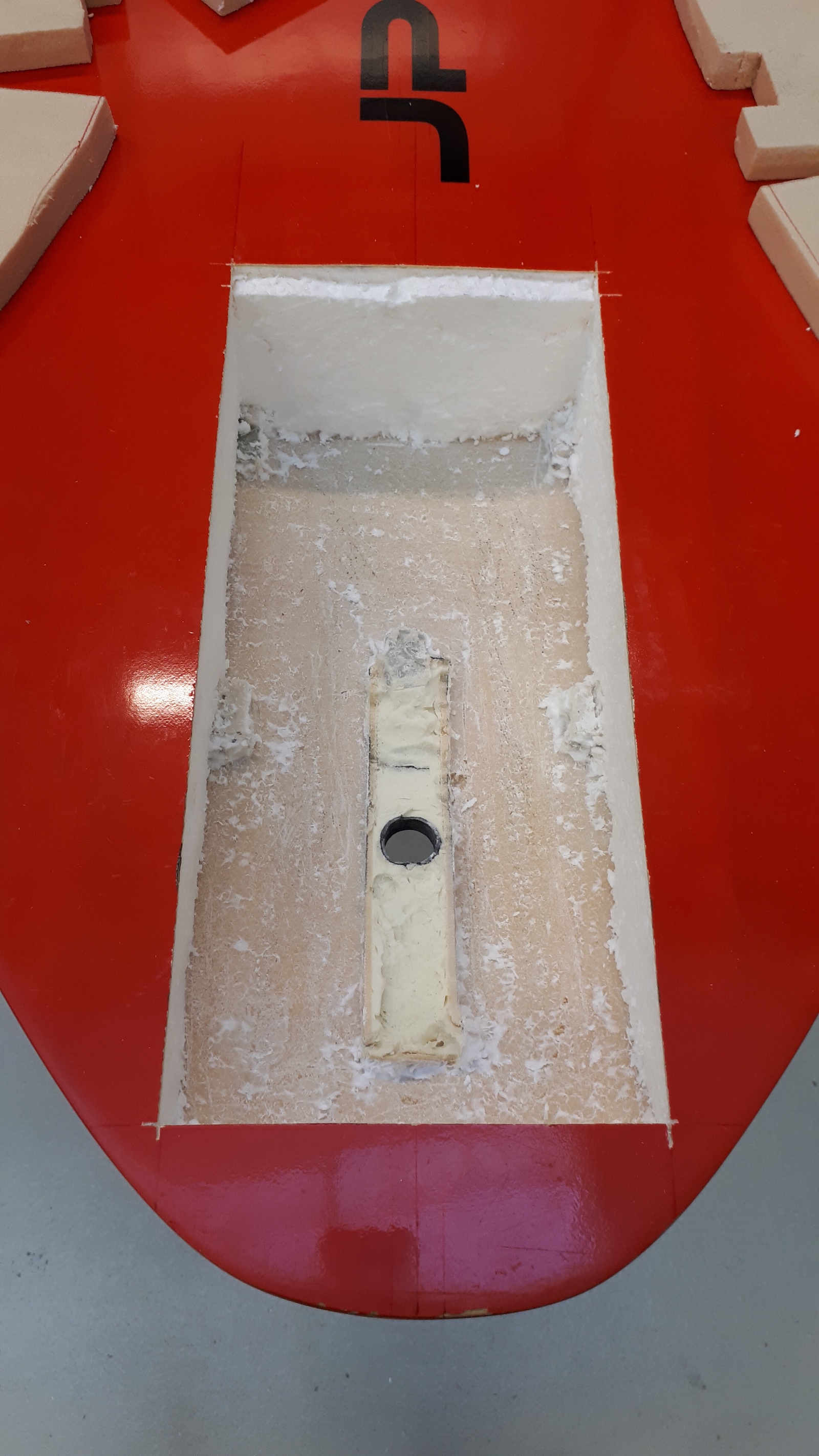
The original screw hole for fin mounting was reused as the aft mounting hole for the foil.
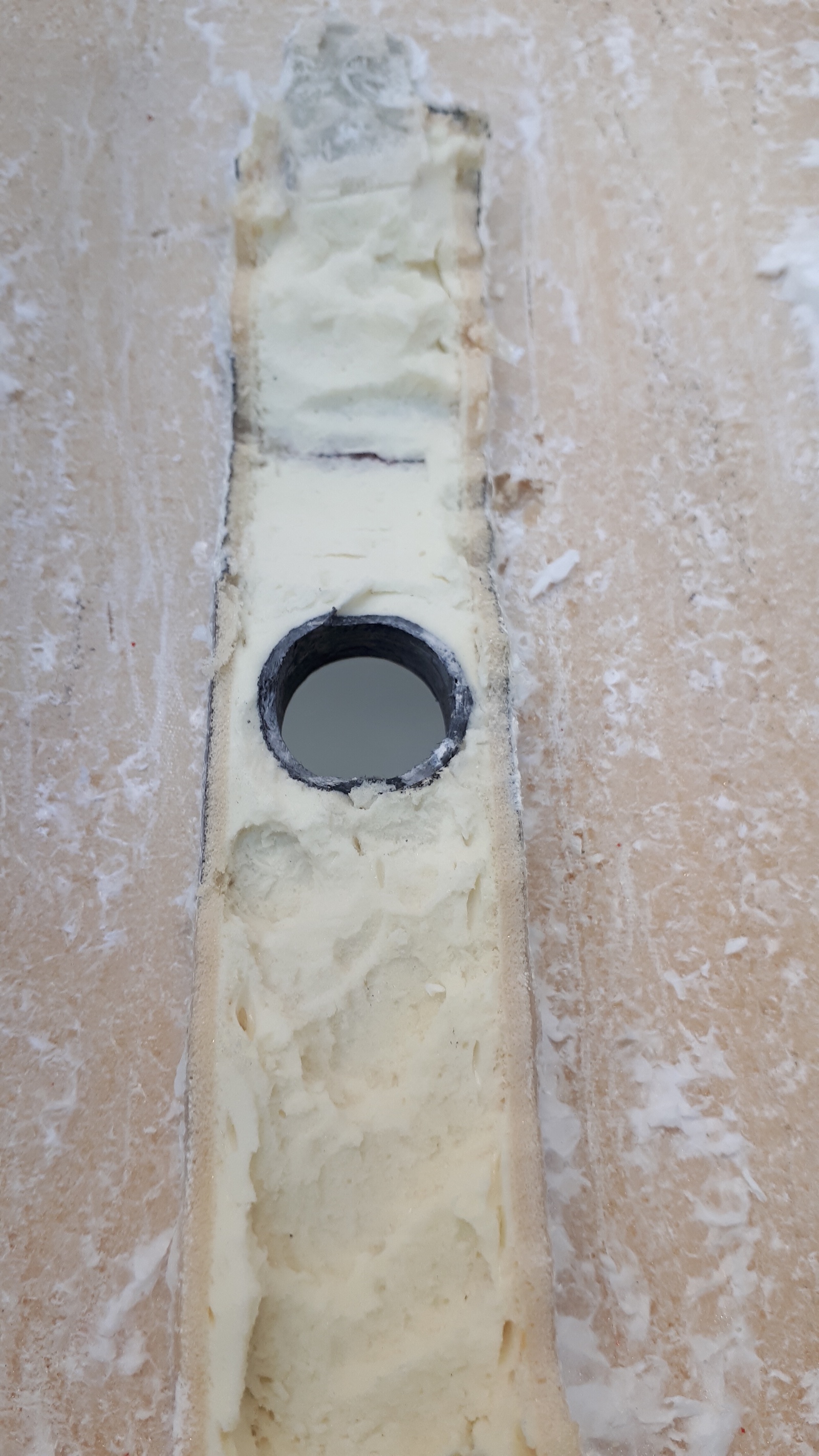
A small plastic cylinder helped to position the carbon insert properly.
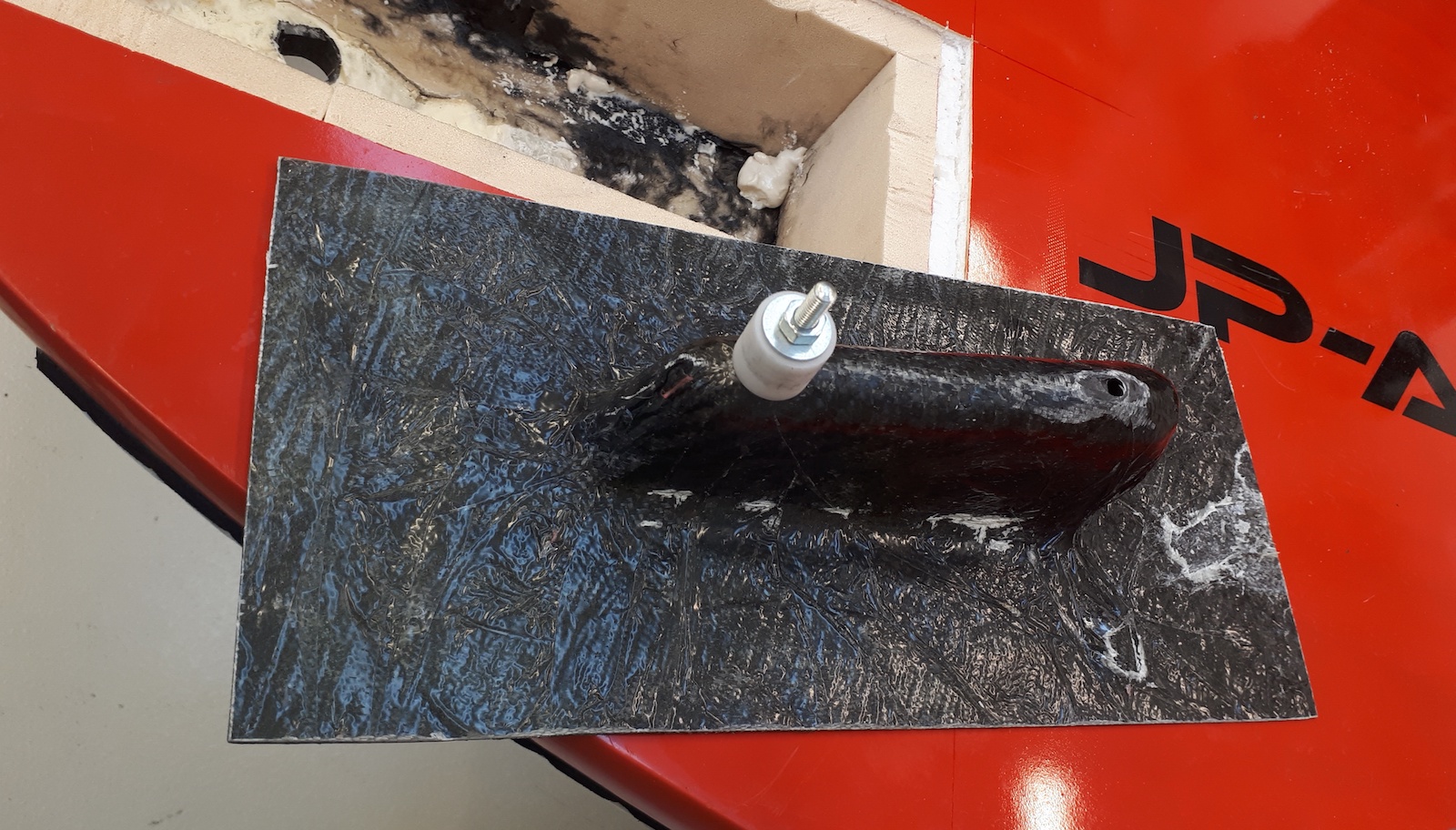
I got hold of some stable and super-light PVC foam that I used in combination with the balsa wood for making the reinforcements for the carbon insert. Given the large seating area of the carbon insert no deformations of the foam under load have to be expected.
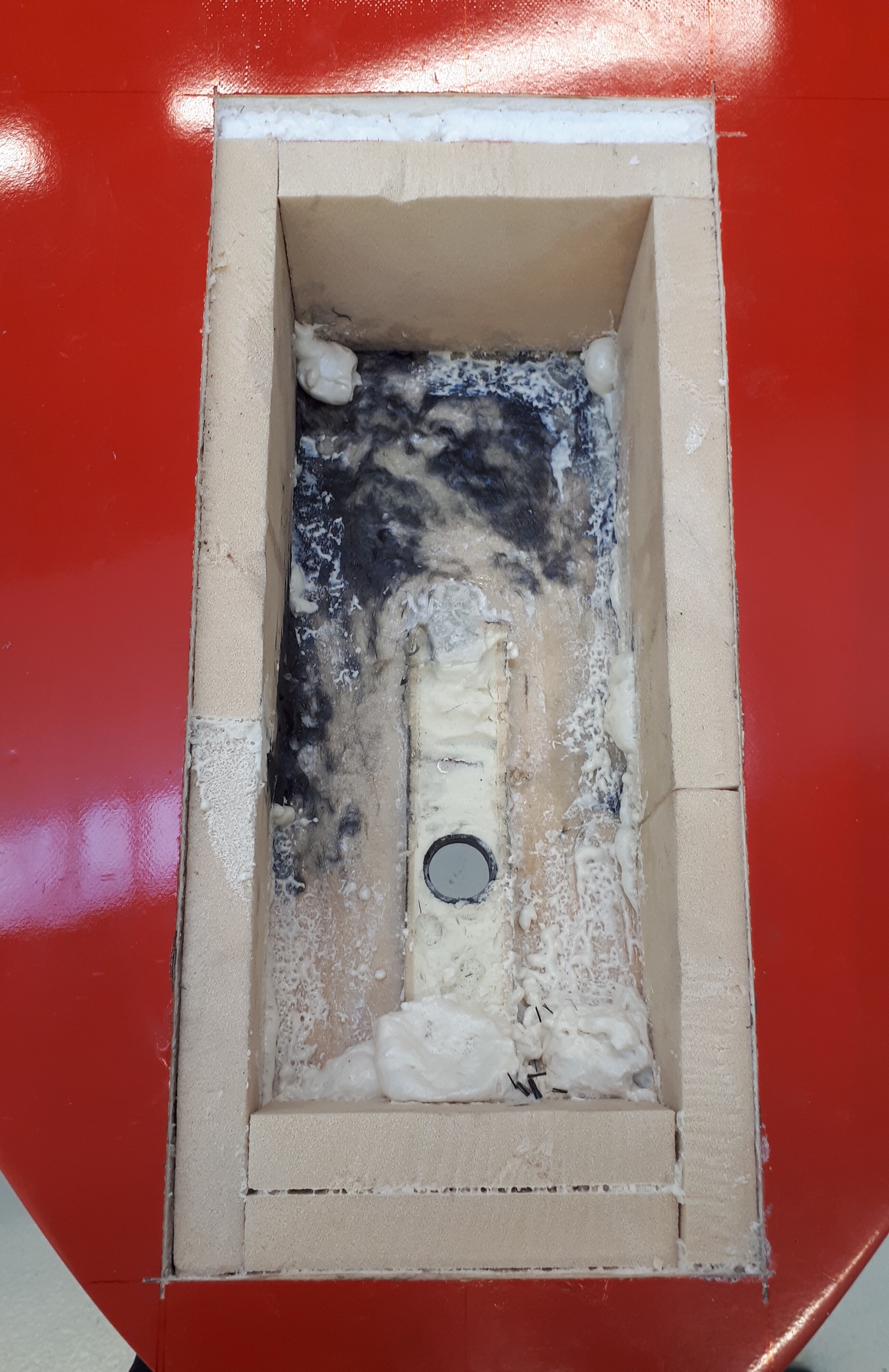
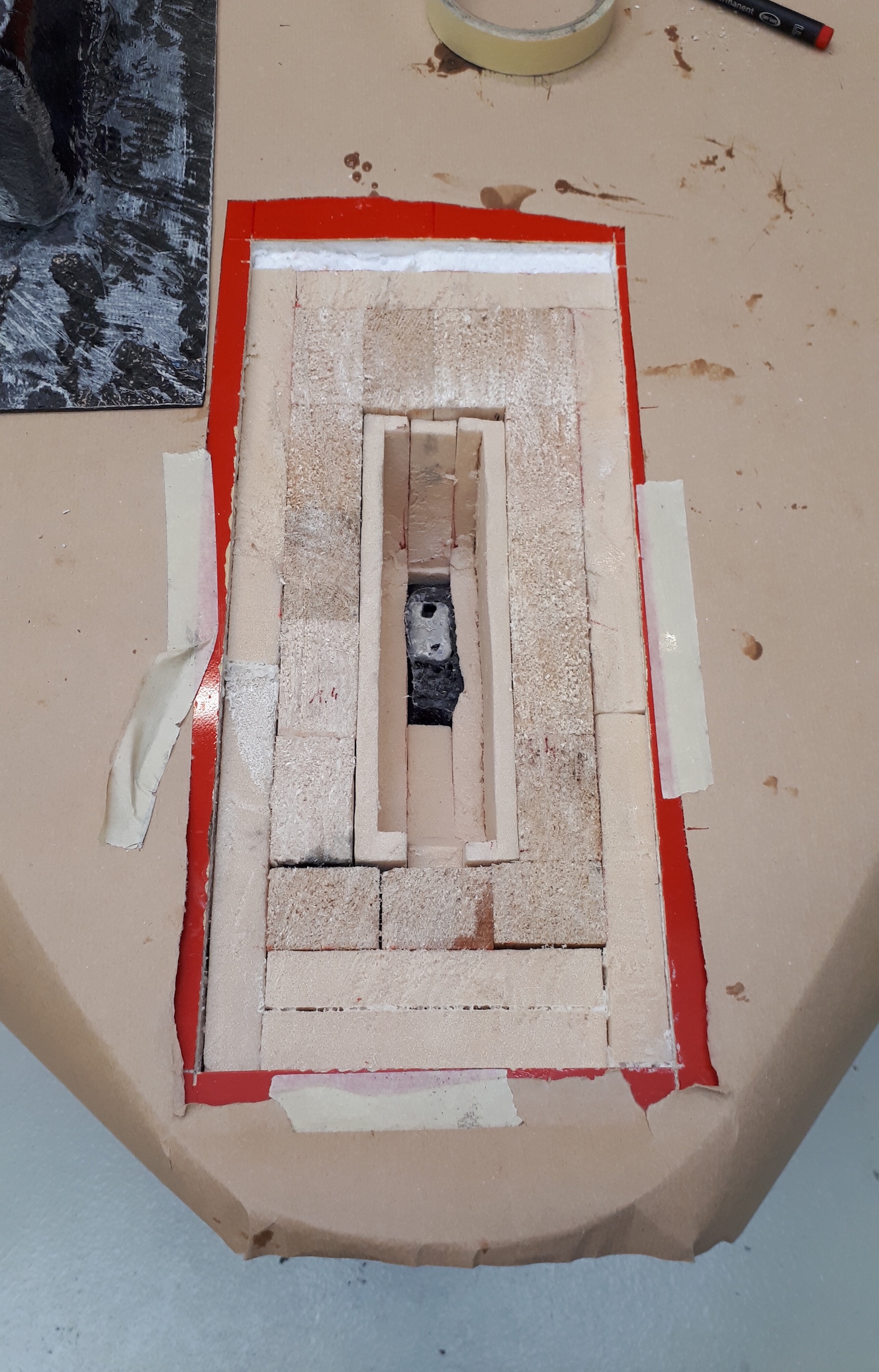
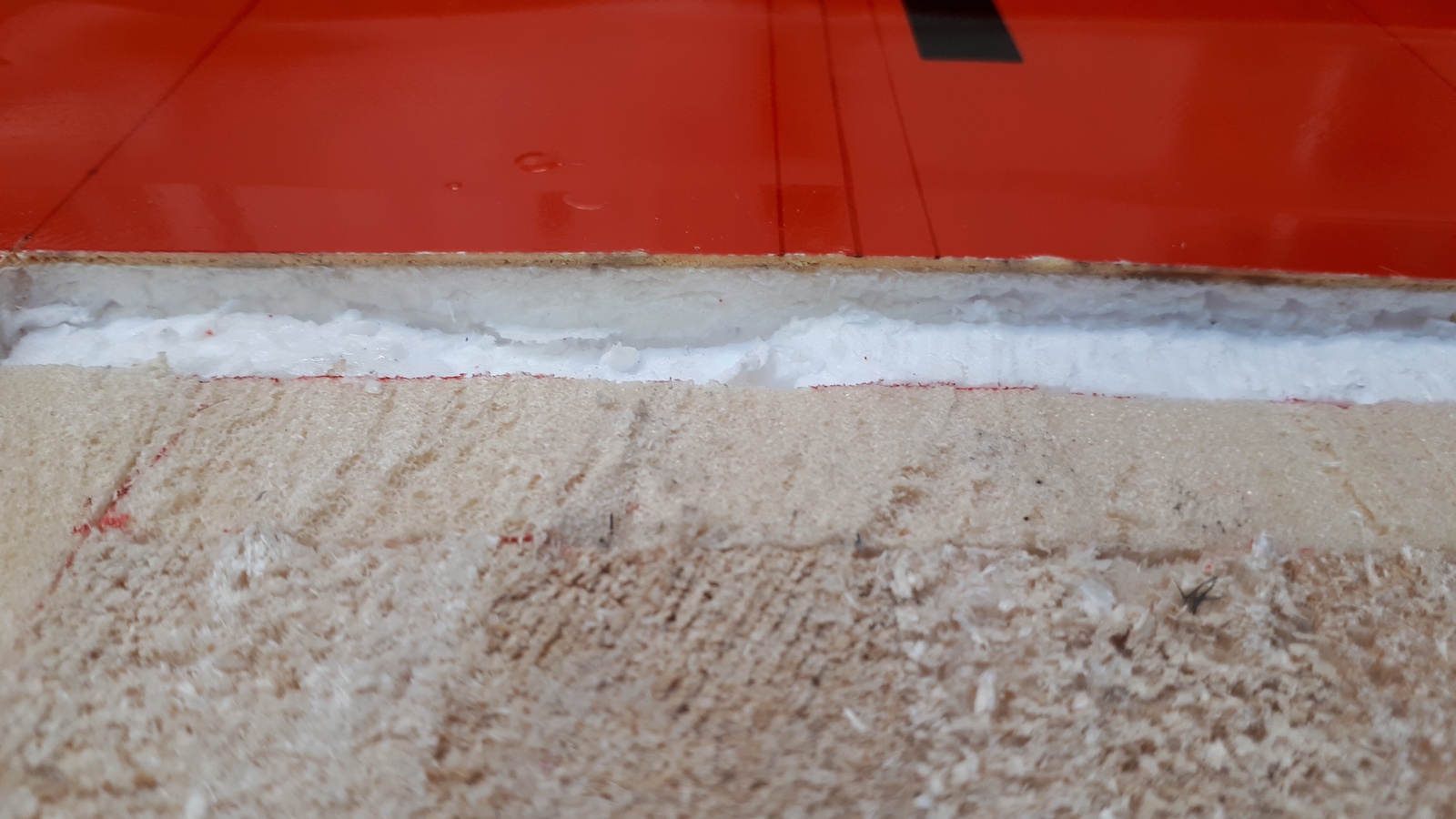
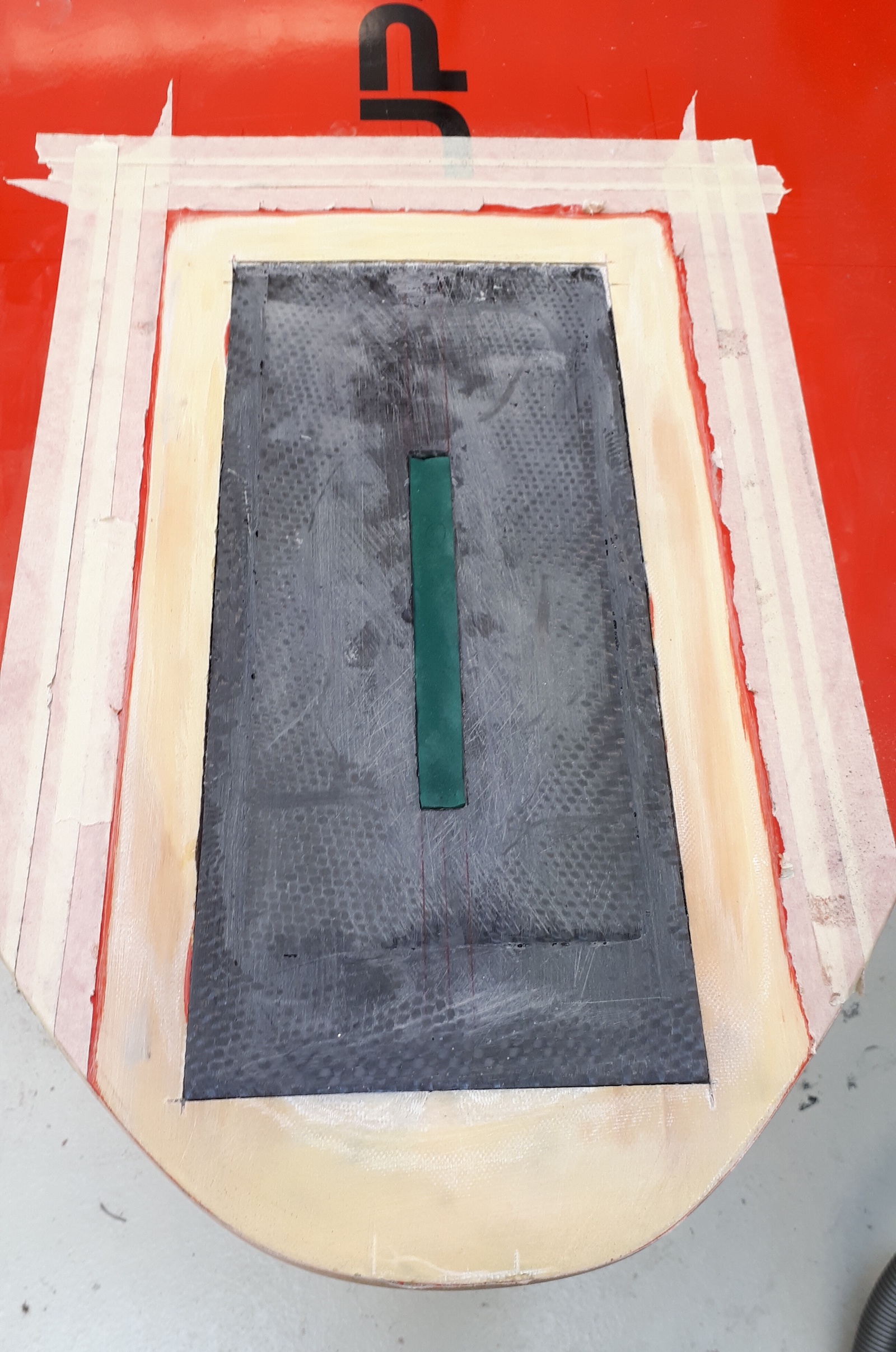
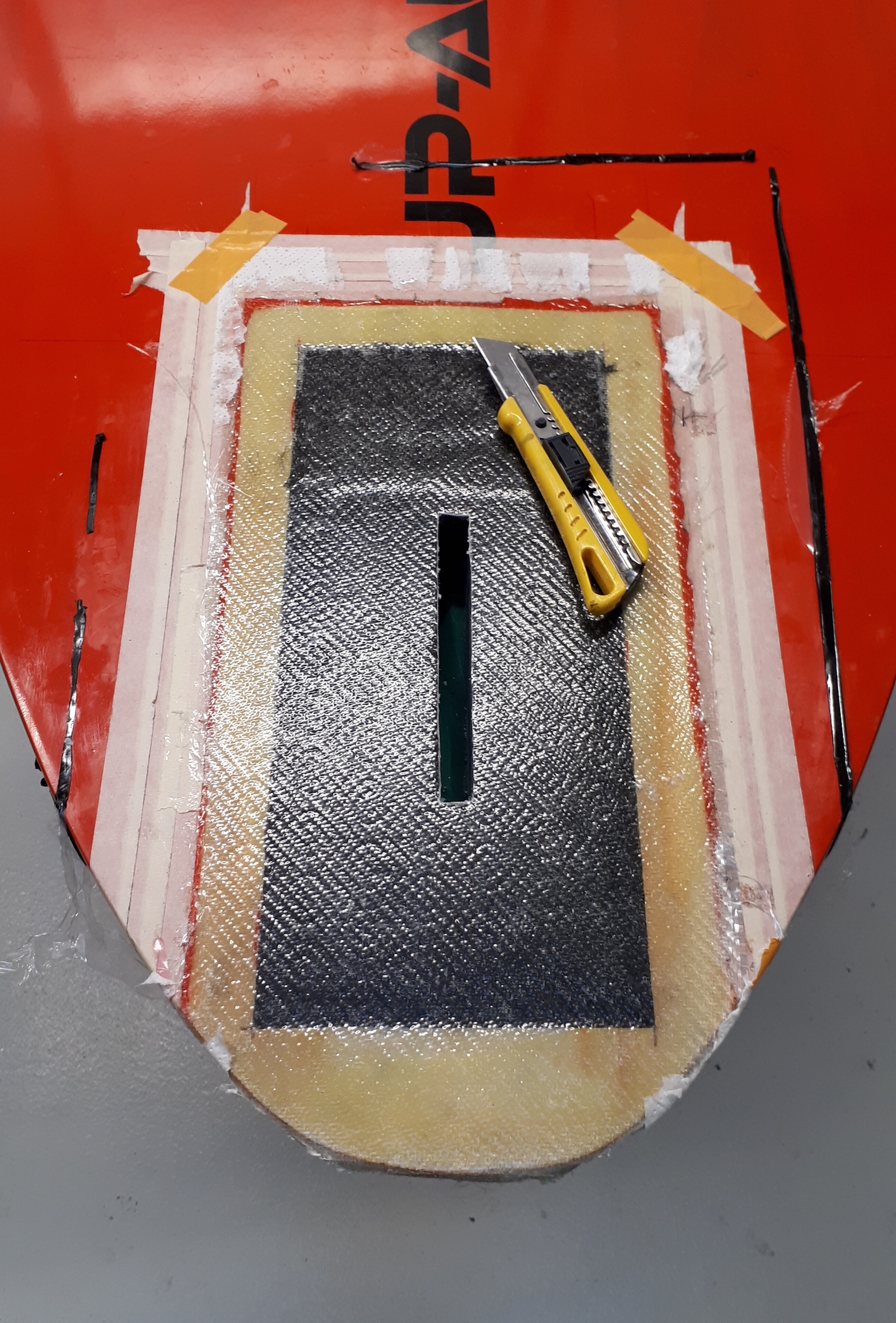
The PVC and balsa wood block and the carbon insert were glued into the board with a mixture of epoxy and 6 mm carbon chips after which it looked like that.
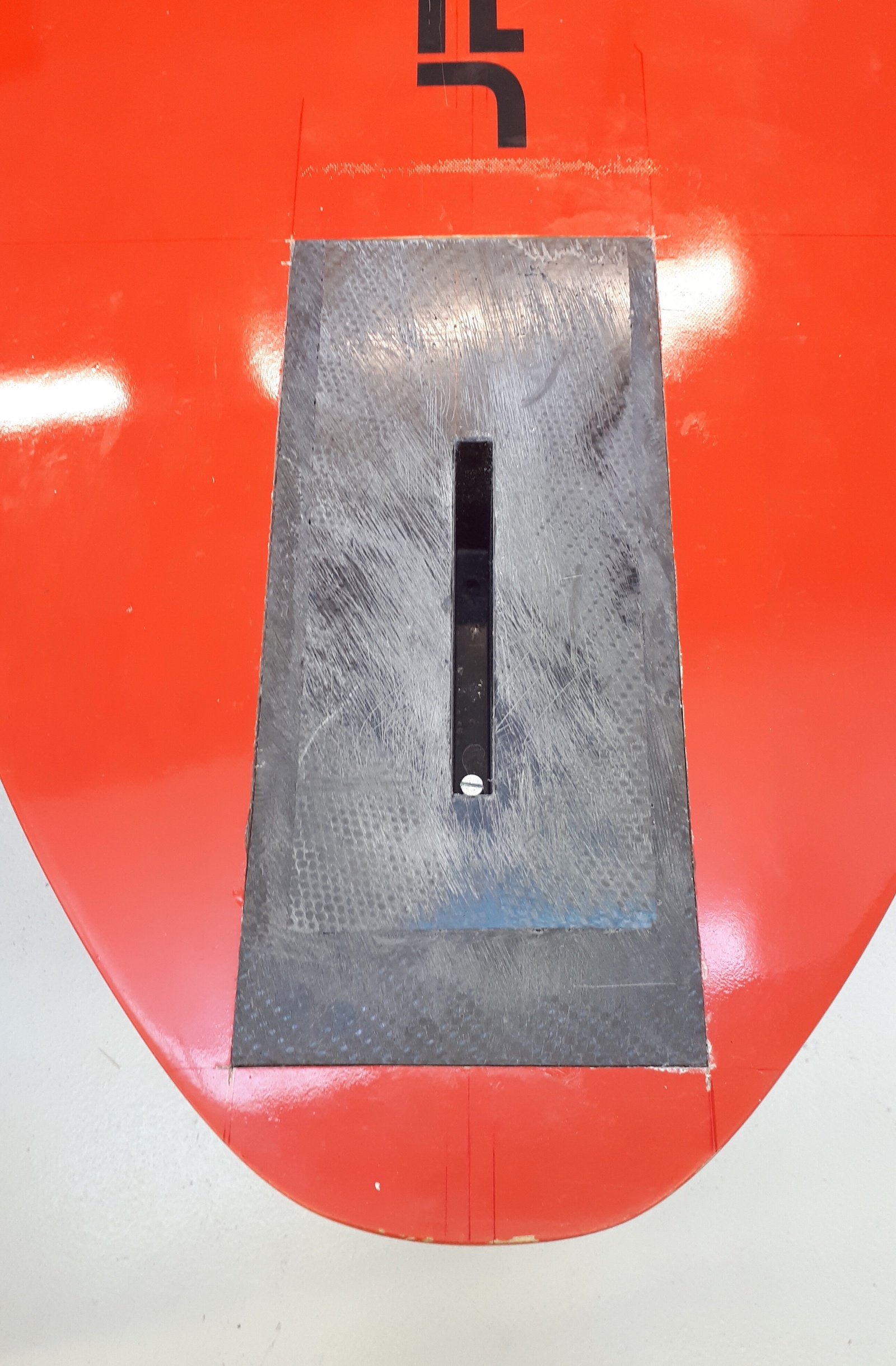
After sanding two layers of 180 g/m2 glass were laminated under vacuum.
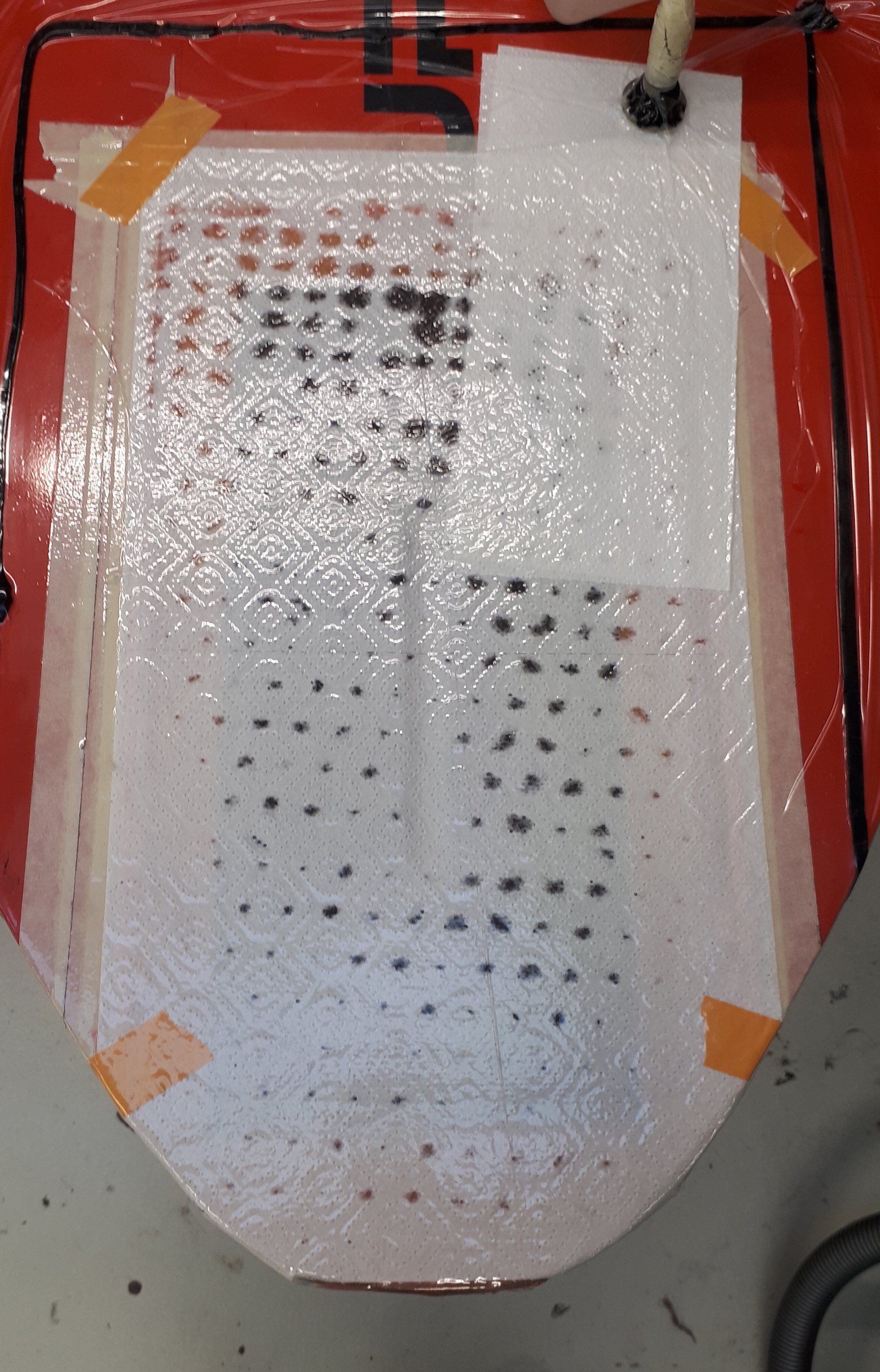
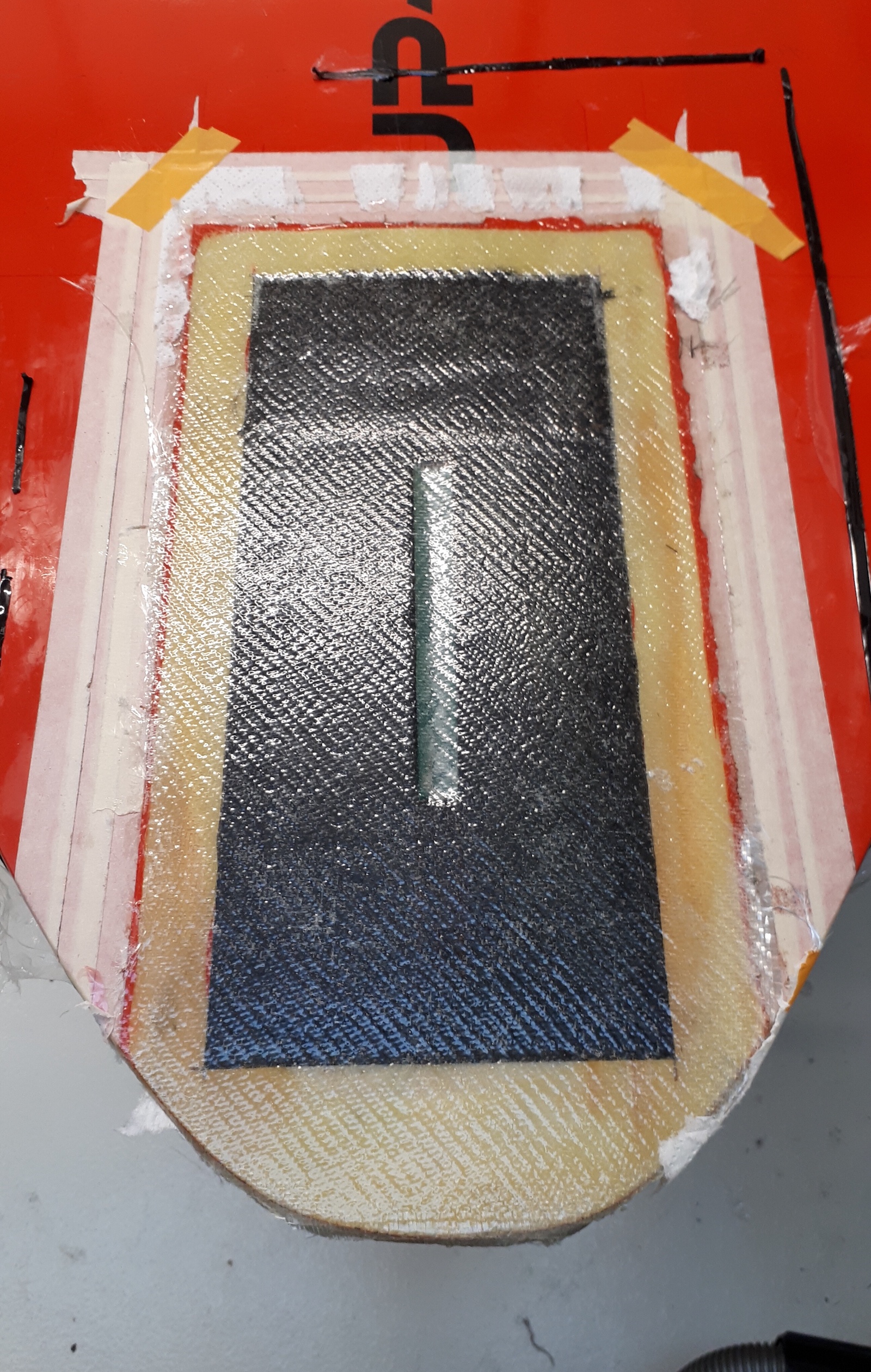
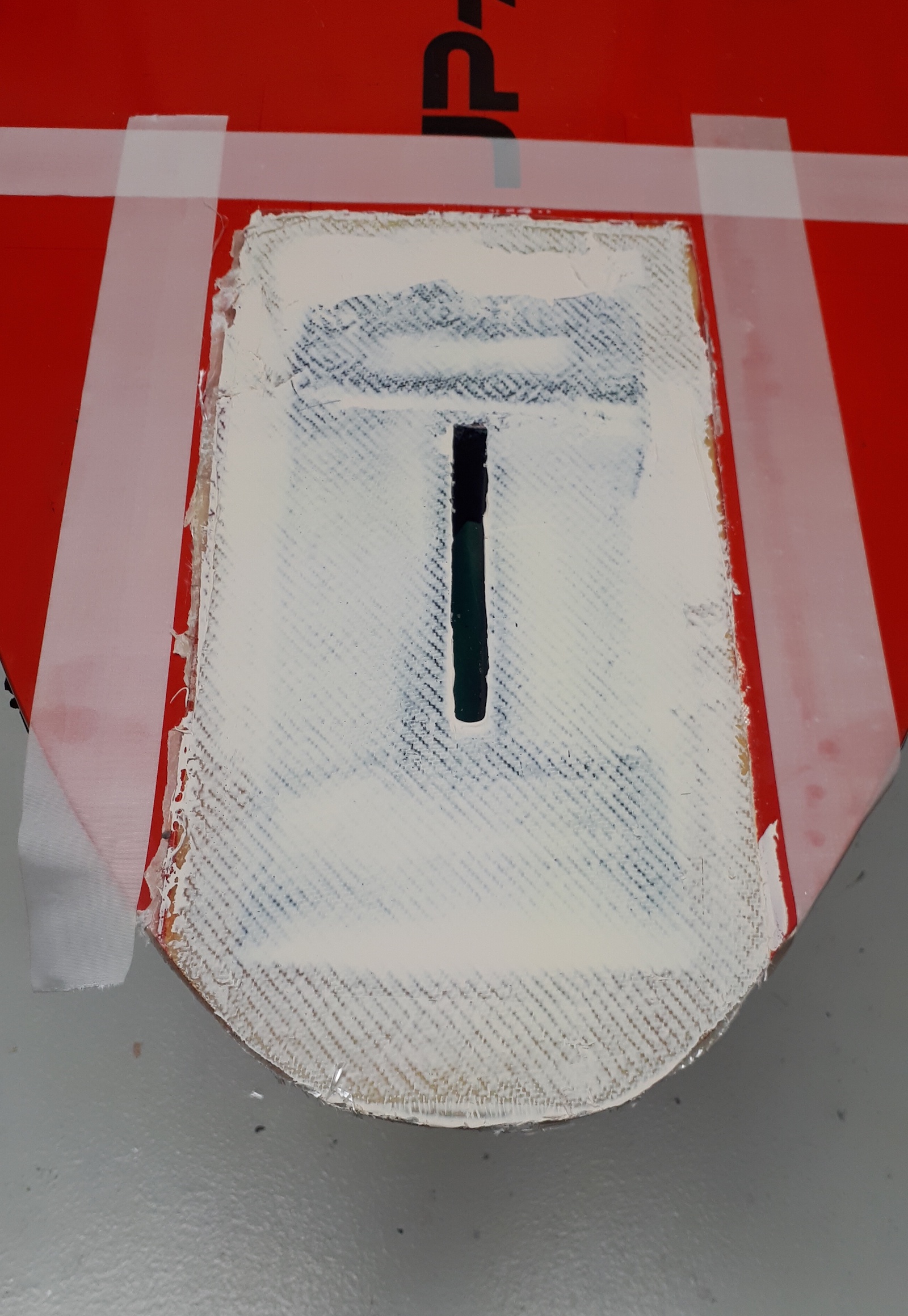
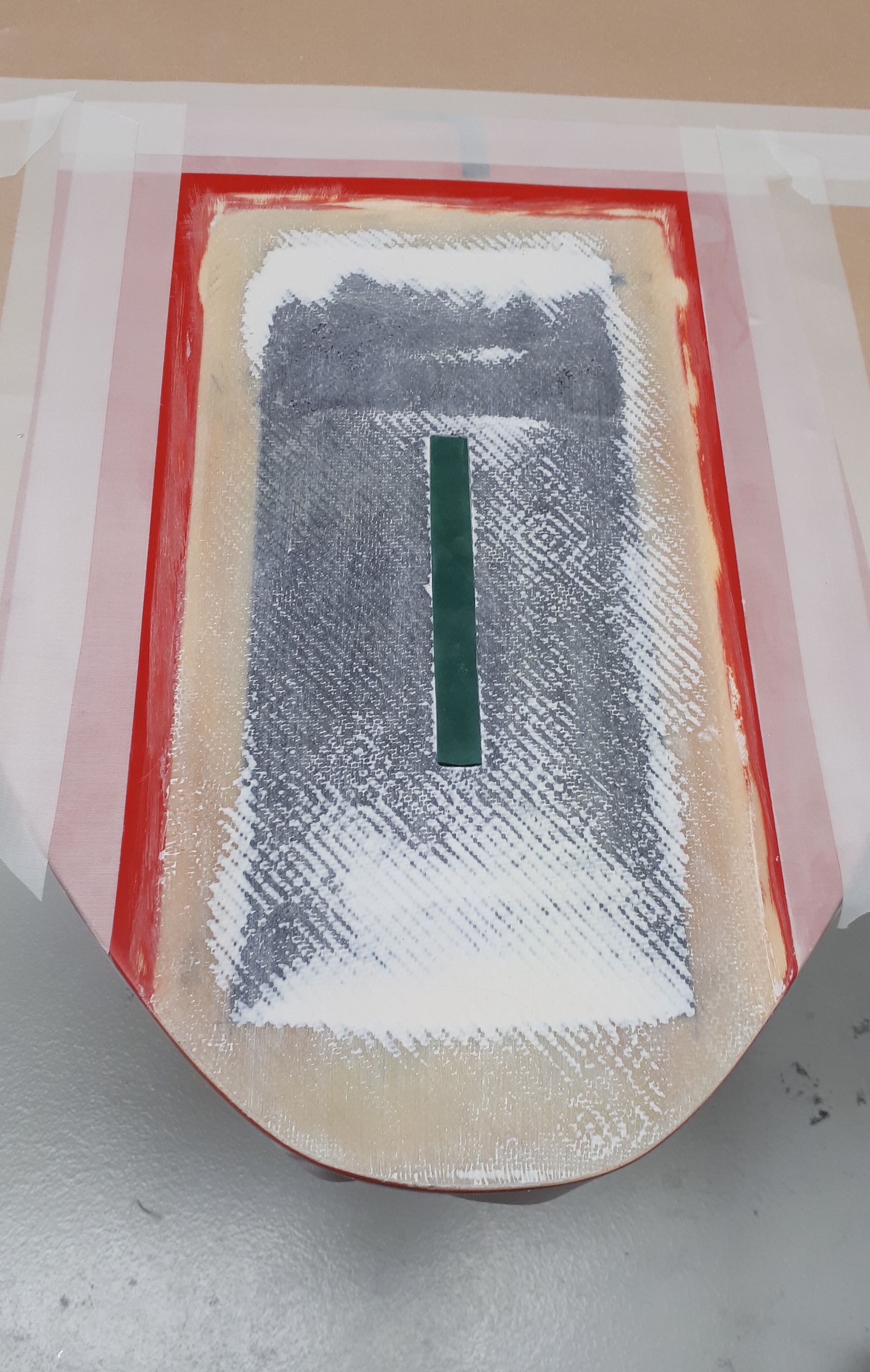
I didn't have a fleece mat for the vacuum step and used kitchen paper instead as you can see by the 'nice' pattern pressed into the surface (see picture above). Nothing that polyester fine filler+sanding couldn't solve:
The next step was to make the mounting holes. As previously I drilled them with a mill and covered their walls with epoxy and carbon cloth.
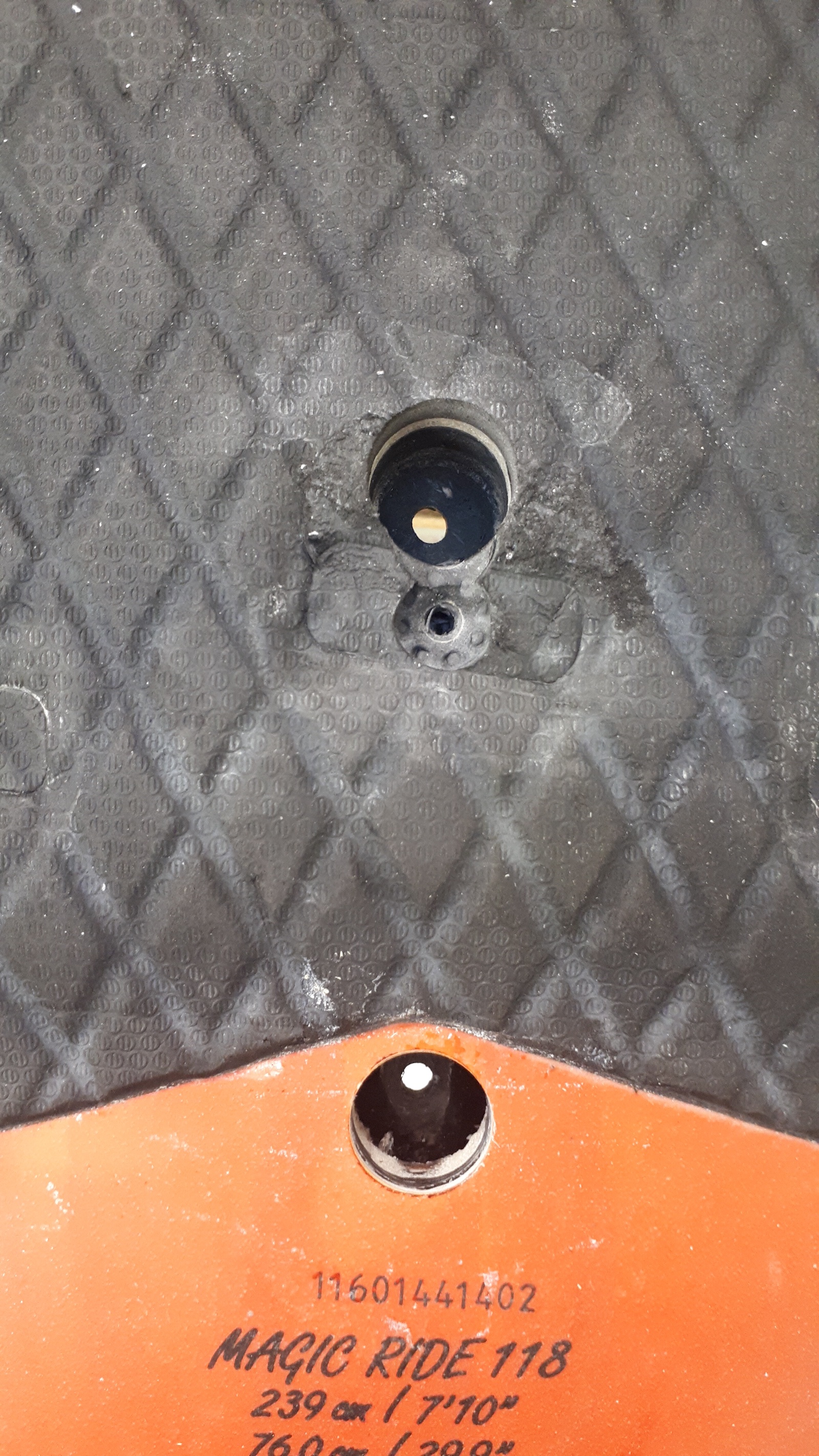
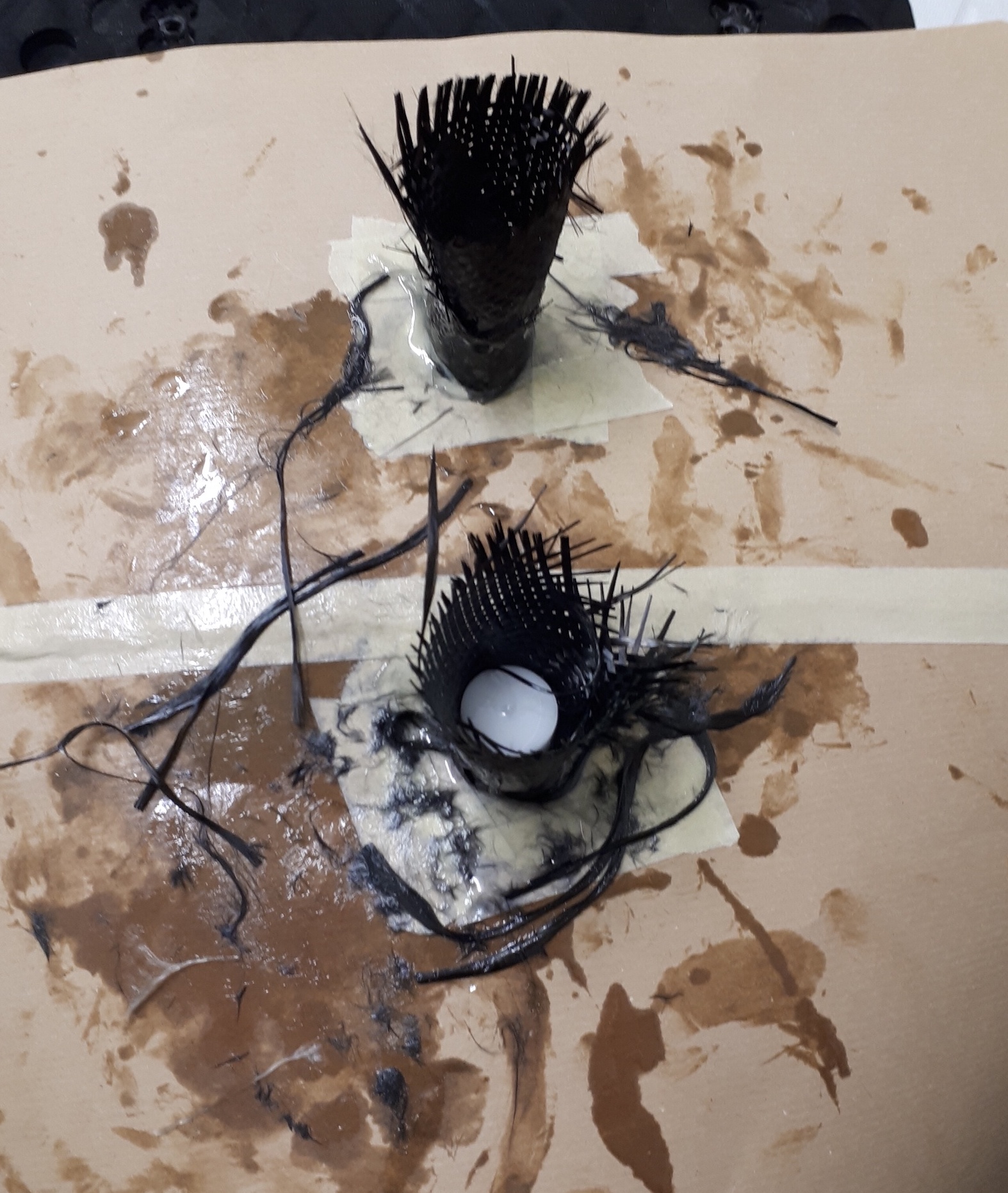
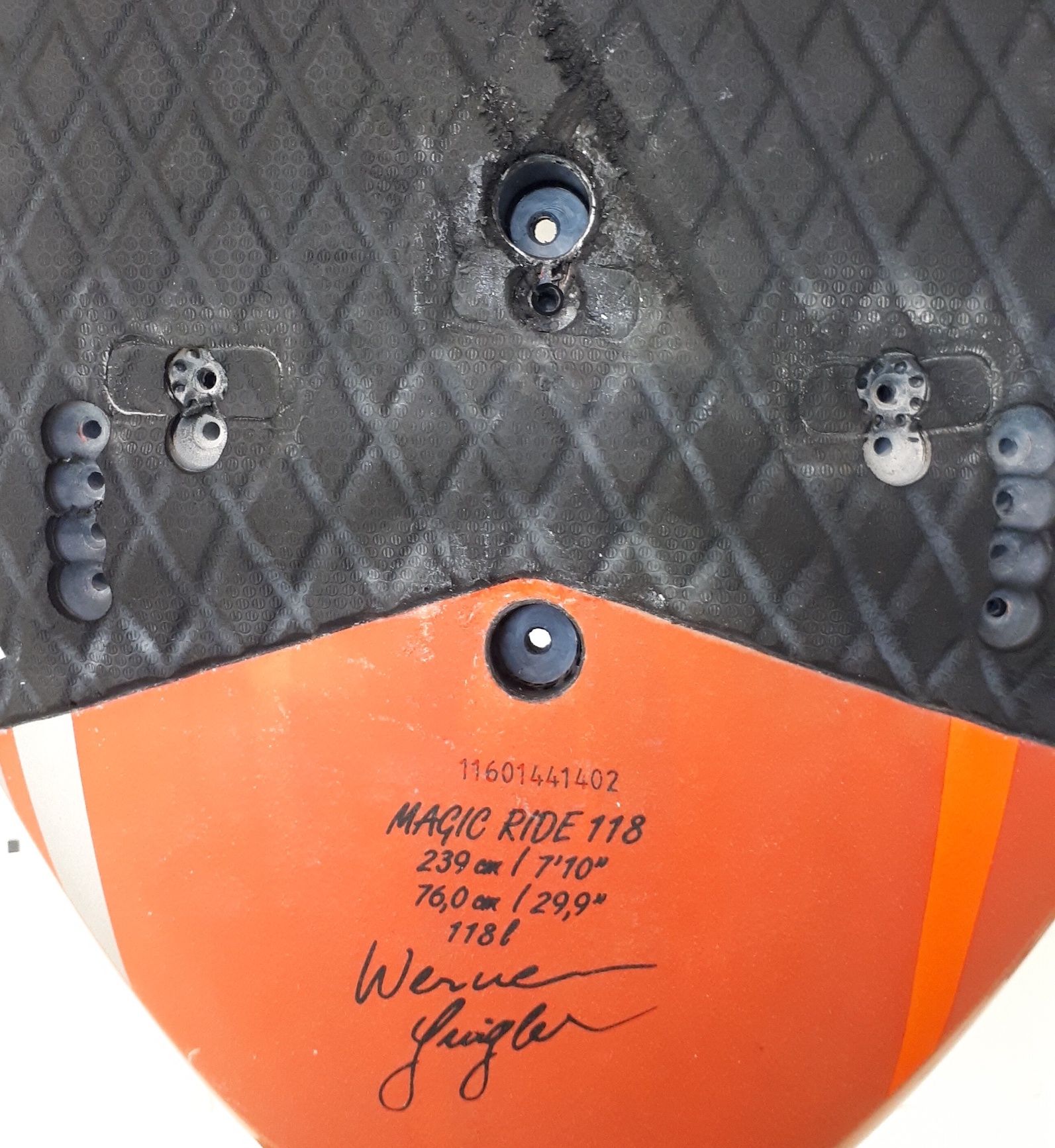
After a few sessions I found that, for me, a single centered foot strap in the back gives a much better feeling than having two. Since the mounting screw for the foil and the foot strap hole ended up very close together (another reason to move the foil position forward) unscrewing the foot strap before mounting the foil is necessary.
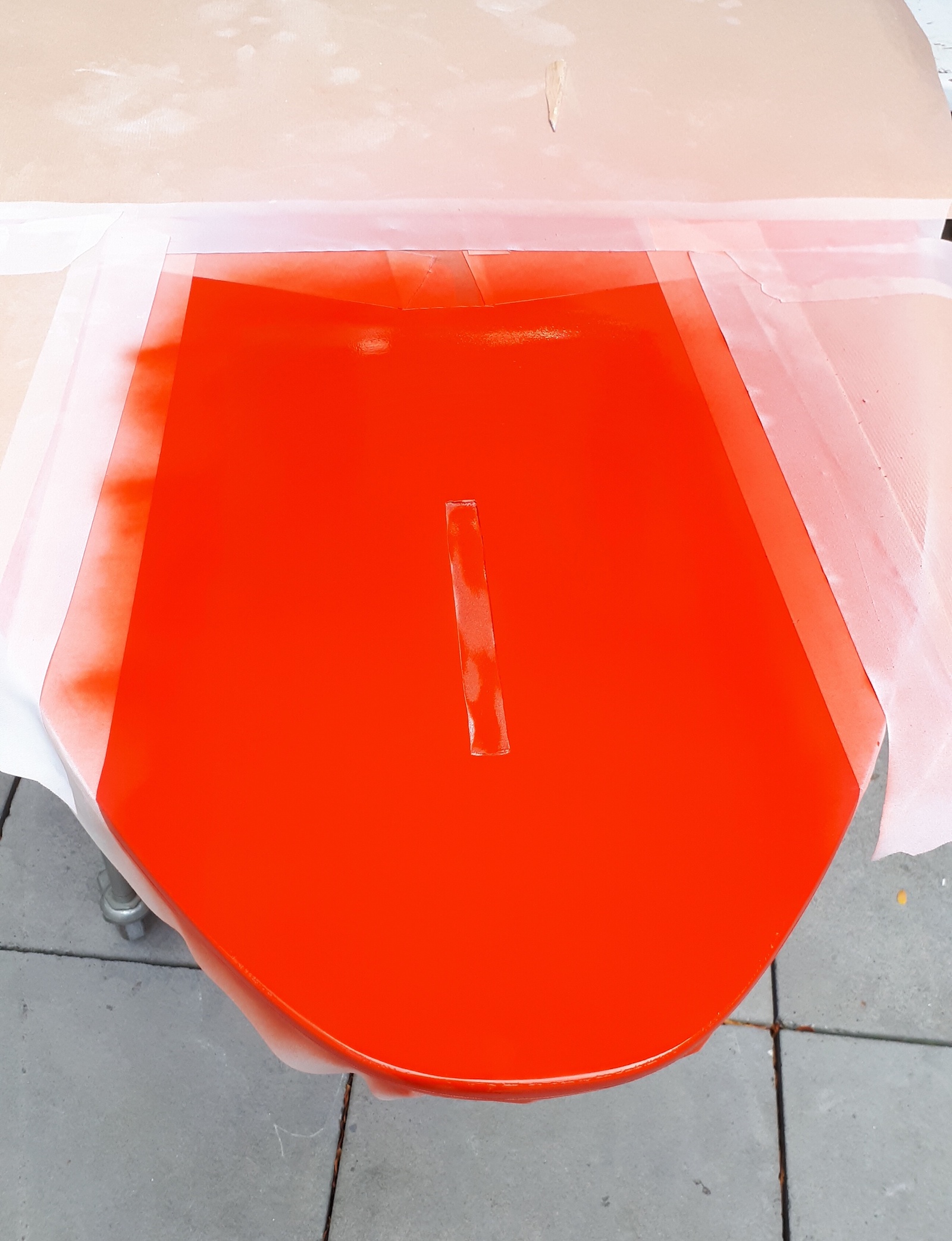
The last steps were spray-filler+sanding followed by a layer of red paint that came (at least) close to the actual red of the board.
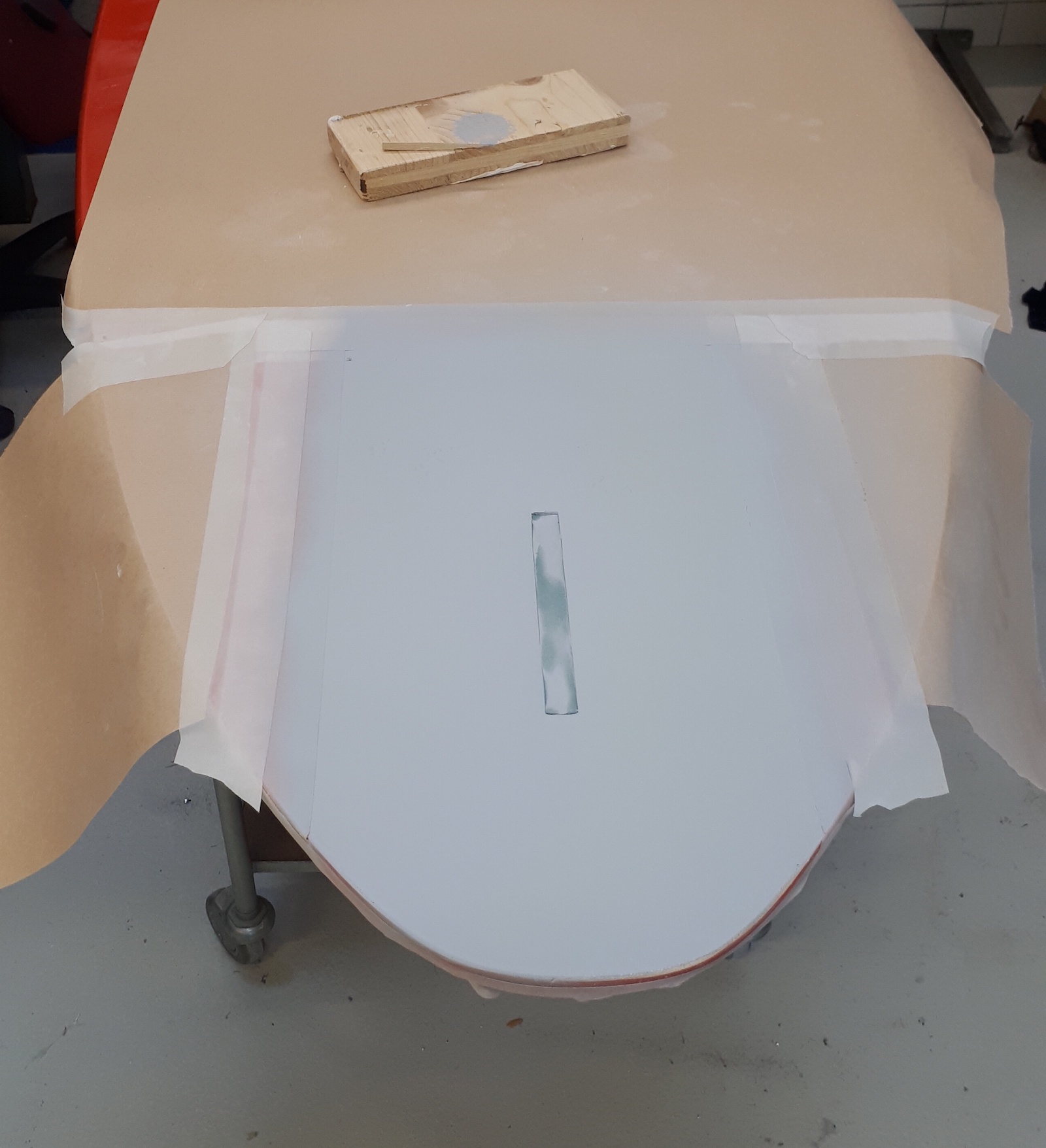
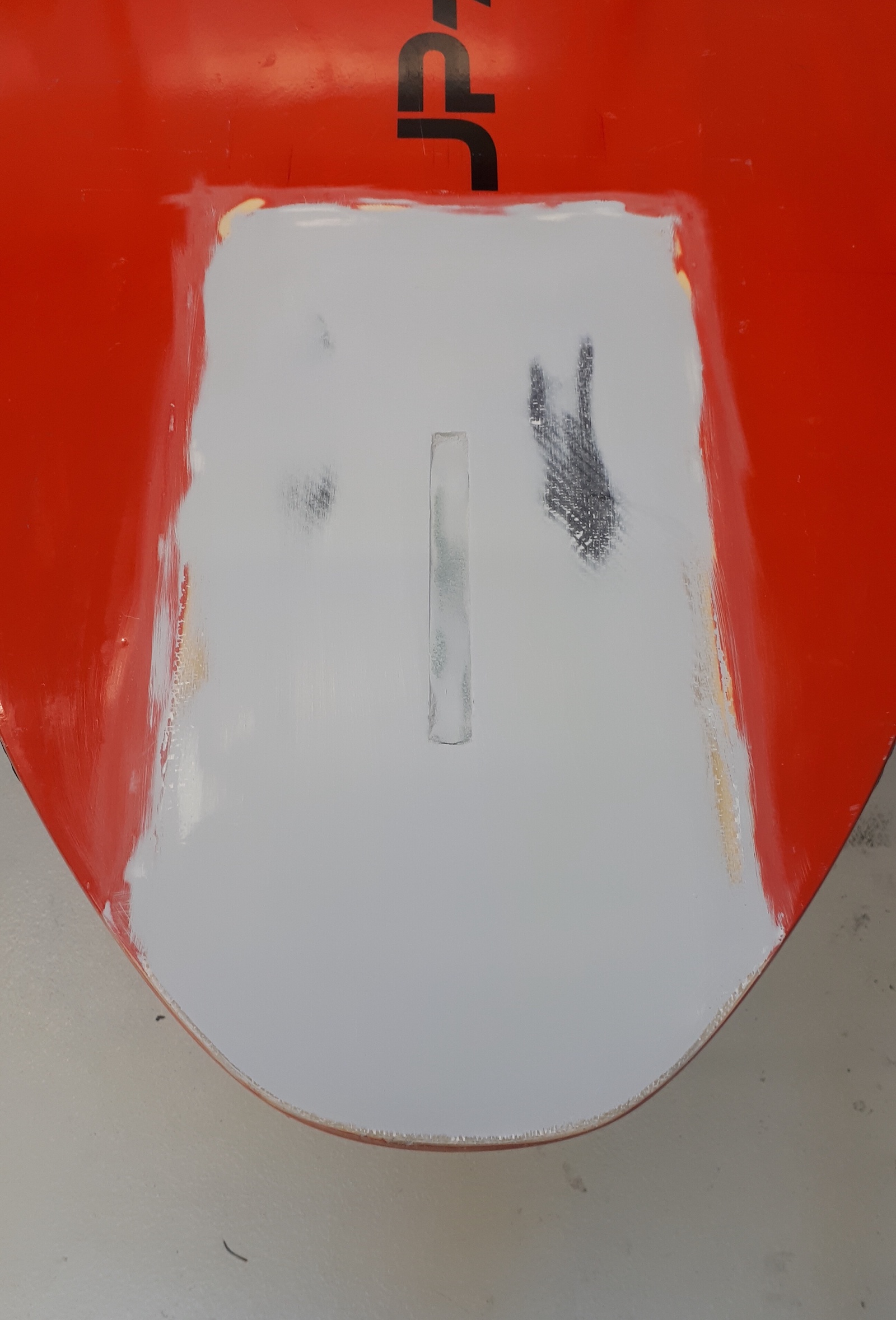
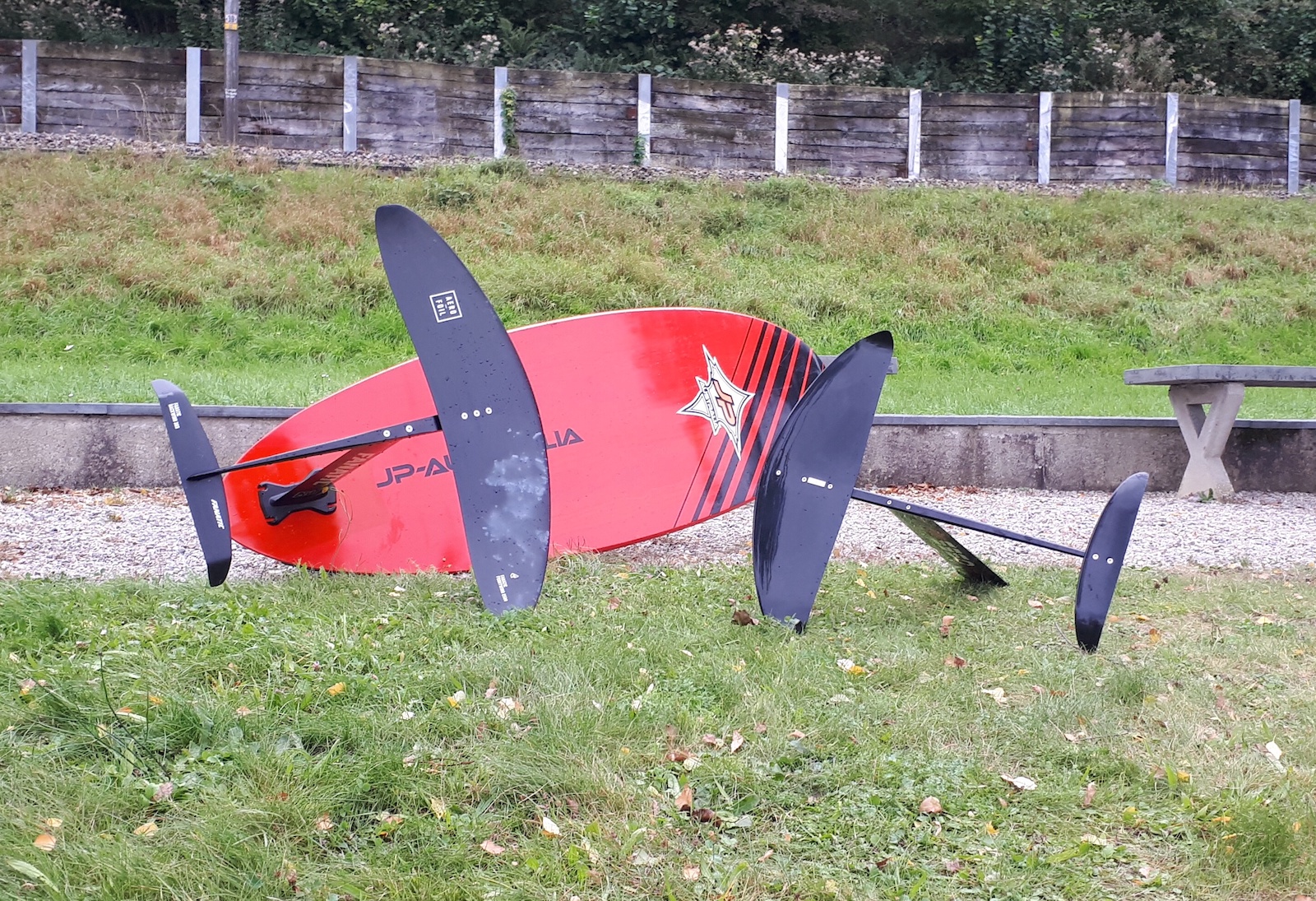
This was the final result:
This is an article from December 2020, that was initially posted on foil-labs.com which became builders-blog.com in January 2026.
Loved this?
Sign up to follow this builder and never miss an update.
Comments
No comments yet. Be the first to share your thoughts!